Quick Answer: Korean families in Gurugram typically hit the hardest adjustment in weeks one through four — heat, noise, domestic help, and traffic culture shock. By month three, routines are in place. The Korean corporate community (Samsung, LG, Hyundai) and established Korean grocery options on Golf Course Road mean you're never truly starting from scratch. KakaoTalk works fine; your Korean bank app probably won't without a workaround.
- KakaoTalk works without restrictions in India; Korean domestic banking apps (KB, Woori) need a VPN or the international version to function reliably abroad.
- Samsung, LG, and Hyundai corporate offices cluster in Sectors 43–49 — a 10–15 minute drive from the expat societies in Sectors 58–65.
- Korean grocery stores operate on Golf Course Road itself: Kim's Mart (Sector 28) and Seela Korean Food Mart (South Point Mall, Sector 53) are the closest to premium expat housing.
- The first month is hard — heat, noise, domestic help management, and traffic. By month three, most Korean families say routines feel normal.
- Gurugram winters (November–February) are genuinely mild and a pleasant surprise after Seoul's cold season.
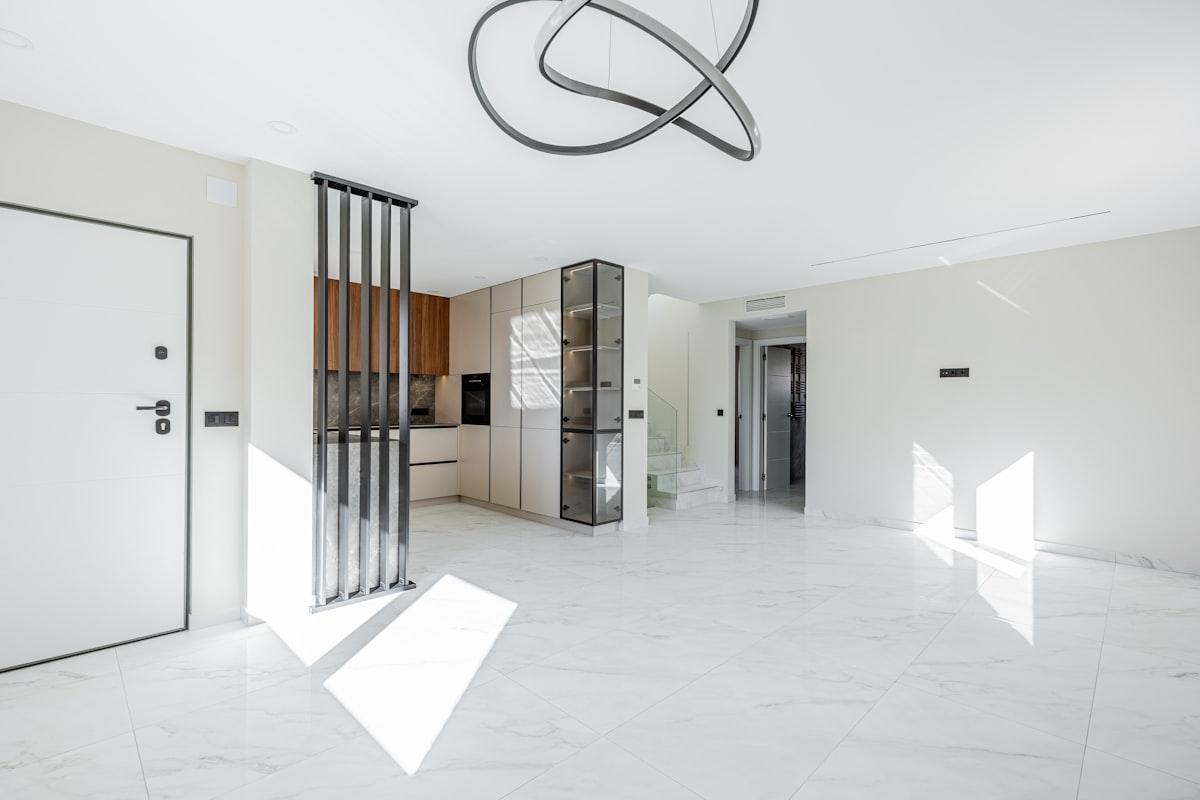
![Modern open-plan living area — premium apartment Gurugram)
Apartments where Korean expat families are already settled
M3M Heights (Sector 65, from ₹1,05,000/mo) has hosted Korean corporate families from Samsung, LG, and Hyundai affiliates. Managed move-in, structured lease, established expat community.
The first month: what it actually looks like
Direct answer: The first four weeks are the adjustment peak. Everything arrives at once — the heat, the noise, the traffic, the domestic help setup, the grocery hunt. It gets easier. Here's what Korean families typically report going through.
Week one usually involves the apartment handover, the first grocery run, and the first real encounter with Gurugram traffic. If you've arrived between April and June, the heat is the first wall. Gurugram's summer sits at 40–45°C with low humidity — very different from Seoul's 30–33°C muggy season. The dry heat is intense in a way that's hard to anticipate. The apartment's air conditioning becomes a lifeline, and most Korean families learn quickly to do outdoor errands before 10am or after 6pm.
The noise is the other early shock. Gurugram is not a quiet city. Premium gated societies buffer most of it, but diesel generators — standard backup for power outages across residential towers — run audibly when the grid goes down. In older sectors, brief power cuts followed by the generator switching on (a two-minute gap, then a low hum) are part of the daily background rhythm. Construction is perennial. Horns are constant on external roads. Korean urban environments are not silent, but Gurugram operates at a different volume.
Week two and three are typically dominated by domestic help logistics. At Gurugram expat budgets, it's standard to have a cook (bai), an ayah (child caregiver, if relevant), and a driver. Many Korean families have a cleaning person as well. Managing a household staff of three or four people is a genuine skill that most Korean families from Seoul don't arrive with — it's simply not part of life there at equivalent income levels. Setting expectations, handling schedules, managing grocery budgets, and communicating across a language gap (most household help speaks limited English; some speak none) takes several weeks to establish. Once you do, it's transformative — but the first month is a learning curve.
Month two is when routines solidify. The grocery circuit is figured out. The driver knows the routes. The cook has learned your household's preferences. You know which roads to avoid and when. Korean colleagues at the office become a social anchor.
By month three, most Korean families report that Gurugram feels like a place rather than a situation. The adjustment hasn't ended, but it's no longer the dominant experience.
First-month setup priorities (in rough order)
- SIM card with a good data plan — Jio or Airtel (do this day one)
- Driver hire — either through your employer relocation support or a society referral
- Cook and ayah — ask your society management or fellow residents for referrals
- Korean grocery run — Kim's Mart (Sector 28) or Seela Korean Food Mart (South Point Mall, Sector 53)
- Install Swiggy, Zomato, Blinkit, and Amazon Fresh for day-to-day delivery
- WhatsApp setup with local contacts — this becomes your primary India communication tool
- VPN configured on your phone before your Korean banking apps stop working (see below)
- Download the Haryana City Gas app or check with your building manager on PNG status
Cultural differences that surface daily
Direct answer: Both Korea and India have hierarchical, high-context social cultures — but the expressions are different enough to create real friction, especially in professional contexts. Here are the differences that Korean expats most commonly encounter in daily life.
Punctuality and time
Korea runs on 빨리빨리 (ppalli ppalli) — fast, now, immediately. The pace of Korean professional and even personal life reflects this. Gurugram's professional culture is genuinely fast in some contexts (the tech and corporate sectors are not slow), but the relationship to time is polychronic. Meetings start 10–15 minutes late as a norm. Service providers give arrival windows, not times. "I'll come in the afternoon" means sometime between noon and six. This isn't rudeness — it's a different frame. Korean expats who arrive expecting Korean-style punctuality from service providers, tradespeople, or even social plans will frustrate themselves. The adjustment is recalibrating expectations, not fighting the baseline.
Saying "yes" without meaning "yes"
This one matters a lot for Korean expats managing household staff or local professional contacts. In Indian communication — particularly in service contexts — "yes" often means "I understand what you're saying," not "I agree" or "I will do this." "That might be a bit difficult" is a polite no. "We'll see what we can do" is probably a no. A head wobble (the famous Indian side-to-side nod) means something like "acknowledged" — it is not a "no."
Here's where it gets interesting for Korean expats specifically: Korean communication is also high-context, with significant reliance on implication and face-saving indirectness. But the specific signals are different. What reads as ambiguous but acceptable in Korean workplace culture can be genuinely unclear in an Indian service or household context. The workaround is direct written confirmation: WhatsApp messages that confirm time, task, and expectation explicitly. It sounds formal for household staff management, but it works.
Domestic help management
Having a live-in or daily cook, a driver, and an ayah is standard at expat-level budgets in Gurugram (₹80,000–1,50,000/month range). This is genuinely unfamiliar for most Korean families arriving from Seoul, where domestic help at this scale isn't accessible at equivalent income levels. The learning curve isn't about values — it's practical. How do you handle days off, sick days, religious holidays (Diwali, Holi, Eid — all paid holidays by convention)? How do you manage grocery budgets entrusted to a cook? How do you communicate dietary preferences across a language gap?
Most Korean families find a rhythm by month two. A few practical anchors: pay on a fixed date, give clear weekly routines in writing (or via a trusted translator app), and treat reference checks seriously before hiring. Society management offices at M3M Heights and IREO Grand Arch keep resident referrals — the easiest place to start.
Noise and sensory adjustment
The sound profile of Gurugram is simply different from any Korean city. Vehicle horns are communication tools, not expressions of anger. Generator startup at 6am is infrastructure, not an incident. Construction runs on Sundays. High-rise premium societies buffer most external noise, but the baseline ambient level — especially in pre-monsoon heat when windows are open — takes Korean families accustomed to Korean urban sound norms at least a month to stop actively noticing.
| Seoul baseline | Gurugram reality | |
|---|---|---|
| Summer temperature | 30–33°C, high humidity (80%+), rainy | 40–45°C, low humidity, dry and intense |
| Winter temperature | -5 to -10°C, cold season Nov–Feb | 5–15°C, mild and sunny — often pleasant |
| Punctuality norm | Strict — 빨리빨리 culture | Fluid — 10–15 min late is standard in social/service contexts |
| Domestic help | Uncommon at equivalent income levels | Standard at expat budgets — cook, driver, ayah typical |
| Traffic driving style | Disciplined lane-keeping, low horn use | Horn as primary communication, lane-optional |
| Ambient noise level | Urban but relatively contained | Generators, construction, horns — louder baseline |
| English fluency (professional) | Low to moderate | High in Gurugram's corporate belt |
| Food delivery apps | Baemin, Coupang Eats — fast, reliable | Swiggy/Zomato/Blinkit — fast, reliable, impressive coverage |
Korean communication setup: KakaoTalk, banking, and local SIM
Direct answer: KakaoTalk works fine in India — there's no firewall, no geo-restriction on the messaging function. Your Korean bank apps are a different matter.
KakaoTalk in India
Unlike China, India has no internet restrictions on Korean apps. KakaoTalk runs on Indian data or wifi without any workaround. Voice and video calls work well. The main limitation is practical: most people you'll deal with in India — service providers, building management, local contacts — use WhatsApp. KakaoTalk stays as your Korea-to-India communication line; WhatsApp becomes your India-to-India tool. Expect to run both simultaneously. This is just how it works.
Korean banking apps abroad
This is a genuine pain point that catches many Korean expats off guard. Standard Korean banking apps — KB국민은행, 우리은행, 신한은행 domestic versions — often detect overseas IP addresses and restrict functionality or block login entirely. The restriction is a security feature, not a punishment, but it's real.
What works:
- VPN with Korean IP: Download a reputable VPN (NordVPN, ExpressVPN) and connect to a Korean server before opening your banking app. Most standard domestic Korean apps then work normally. VPNs are legal in India.
- Woori WON Global / KB Global: These international versions of major Korean bank apps are designed for overseas users, with multi-language support and international transfer features. Less full-featured than the domestic apps but don't require VPN.
- Pre-departure setup: The cleanest solution is to enable overseas usage, register an international phone number, and set up your banking sessions while still in Korea before departure.
International money transfers (보내기 to family in Korea) are the primary use case. Most Korean expats with corporate postings receive salary in India in INR and make periodic remittances. SWIFT transfer through the bank or a service like Wise (widely used) handles this.
Local SIM
Get an Airtel or Jio SIM on arrival — your employer relocation coordinator usually handles this. These are postpaid plans that require your passport and visa for registration. Data is cheap and fast; 4G/5G coverage across Gurugram's premium sectors is reliable. Your Korean number can be kept active on a basic plan for verification purposes (banking OTPs, Korean app registrations).
Set up your Korean banking VPN access and test it before leaving Korea. The verification SMS that some apps send to confirm overseas access can only be received on a Korean number — easier to sort out while you're still there.
Korean BBQ at home: gas, ventilation, and the practical setup
Direct answer: You can do Korean BBQ at home in Gurugram. It requires a small amount of planning around gas supply and ventilation. Most Korean expat families figure this out by month two.
Gas supply in Gurugram
Premium apartments in Gurugram's Sector 58–65 belt typically have one of two setups:
PNG (Piped Natural Gas): Haryana City Gas (HCG) operates the PNG network in Gurugram. High-rise societies in the premium sectors increasingly have PNG — continuous supply, no cylinder-juggling, metered billing. Check with your building manager on arrival. If PNG is available in your apartment, it's the cleaner, more convenient option.
LPG cylinders: Older buildings or those not yet connected to PNG use LPG cylinders (Indian Oil, Bharat Gas, or HP Gas). Cylinders are refilled on order — the booking is done via phone, SMS, or the provider's app, and delivery is usually within a day or two. One cylinder lasts a typical Korean family about three to four weeks with regular cooking.
For tabletop Korean BBQ grills using butane cartridges (the kind you'd buy at a Korean convenience store): butane cartridges are available on Amazon India and at some of the larger supermarkets. They're not as readily stocked as in Korea, so ordering a batch on Amazon when you arrive makes sense.
Ventilation reality
Most Indian high-rise apartment kitchens have an exhaust fan, not a powerful range hood. For Korean BBQ with significant smoke — samgyeopsal, galbi — a kitchen exhaust fan alone won't clear the smoke quickly. This is the practical issue. A few solutions Korean families use:
- Electric Korean BBQ grill (smokeless): These work well on an apartment kitchen counter. Smokeless BBQ grills are available on Amazon India and Coupang-to-India shipping. The setup is simpler and the smoke is genuinely minimal.
- Balcony BBQ: Some apartments have large balconies — a tabletop gas grill on the balcony solves the ventilation issue entirely. Check your society rules (some societies restrict open-flame balcony grilling).
- Window + kitchen fan combination: For the occasional BBQ session, opening balcony doors and running the kitchen fan handles the smoke reasonably well with lighter cuts. Not a permanent solution but workable.
Most Korean families in Gurugram end up with an electric smokeless grill for weekday BBQ and reserve the full gas-grill setup for outdoor or balcony occasions.
Seela Korean Food Mart at South Point Mall (Sector 53, Golf Course Road) stocks Korean BBQ accompaniments including ssam vegetables, doenjang, and gochujang. It's the closest well-stocked Korean grocery to M3M Heights and IREO Grand Arch.
Food sourcing: Korean cooking at home
Direct answer: You won't have to live without gochujang, doenjang, or Korean ramyeon in Gurugram. The supply is real, if smaller than Seoul's. Here's where to find what.
Korean grocery stores near expat societies
On Golf Course Road (closest to Sectors 58–65):
-
Kim's Mart — Golf Course Road, A Block, DLF Phase 1, Sector 28. The most established Korean grocery in Gurugram proper. Open 9am–9pm. Stocks gochujang, doenjang, Korean soy sauce (간장), Korean rice, kimchi, Korean ramyeon, and basic frozen Korean items. This is most Korean expat families' primary run.
-
Seela Korean Food Mart — South Point Mall, Sector 53, Golf Course Road. Closer to the Sector 58–65 expat cluster. Stocks baked goods, frozen items, Korean sauces, and runs an online store for delivery in Gurugram.
-
Ichiba Food Store — South Point Mall, Sector 53, Golf Course Road. Large-format Asian grocer carrying Korean and Japanese products.
-
Yamato-Ya — Sector 57, Gurugram. Smaller, more Japanese-focused but carries Korean items. Close to IREO Grand Arch.
In Delhi (worth knowing for specialty runs):
- BG Food Mart — Safdarjung Enclave, Delhi. Older-established Korean grocery serving the embassy district. Better for specialty items.
- The Ramyun Zip — GK-2, Delhi. Korean instant noodle specialist.
What Korean families typically import from Seoul
Even with local sourcing, there are categories where Korean families rely on bringing supplies back from Seoul visits or having colleagues carry items over:
- Korean rice brands (specific preferred varieties like Chucheon or Icheon rice — local Indian rice is different)
- Premium gochujang and doenjang (local stores stock the standard brands; specialty or traditional varieties are harder)
- Korean anchovies and dried seafood (myeolchi 멸치 for stock — limited local availability)
- Korean sesame oil (참기름) — the local Indian versions vary in quality
- Specific snacks and confectionery — Pepero, Binggrae banana milk, Choco Pie (Choco Pie is actually made in India by Orion so available here; the others, less so)
Amazon India's Korean food section has expanded. BigBasket carries a few Korean items (gochujang from CJ has appeared). Nature's Basket in premium malls occasionally carries Korean sauces. But don't rely on these as primary sources — they stock inconsistently.
Kimchi: Making it at home is more reliable than buying it in Gurugram. Napa cabbage (배추 baechu) is available at premium supermarkets and at INA Market in Delhi. The Korean community has well-circulated kimchi recipes adapted for locally available ingredients. Ask a Korean colleague's spouse — this knowledge is actively shared in the community.
Korean community anchors: churches and associations
Direct answer: Korean churches exist in Delhi NCR and are historically significant social anchors for Korean expat communities — functioning similarly to how Indian temples work for Indian diaspora abroad. The primary churches are in Delhi rather than Gurugram itself, but they're within a 30–45 minute drive.
Korean churches in Delhi NCR
The Korean expat community in Delhi NCR — estimated at around 3,500 people as of recent counts, with the real number likely higher given corporate expansion — has established several church congregations:
- New Delhi Bethel Korean Church — Greater Kailash, Delhi
- New Delhi Korean Church — Vasant Kunj, Delhi
- St. Alphonsa's Church (Vasant Kunj) — holds Korean-language services alongside its regular services
Shincheonji Church also maintains an India congregation with a New Delhi presence.
Korean churches abroad typically function as more than worship spaces — they're the social infrastructure for the community, particularly for accompanying spouses and families who don't have the ready-made social network that comes with a corporate placement. Weekend service is often followed by shared meals, and these gatherings are where Korean families in Gurugram build their non-work social circles.
Korean Association
The Korean Association maintains an office in Hauz Khas Complex, Delhi, and runs Korean-language supplementary classes for Korean expat children — important for families on multi-year postings who want to maintain Korean language proficiency. For children in international schools in Gurugram, this addresses a real need.
Corporate community networks
For Korean expats at Samsung, LG, or Hyundai, the company community is the first social layer. Samsung India's corporate office is at Two Horizon Centre, Golf Course Road (Sector 43) — the same road that anchors the expat residential belt. LG India sits in Sector 49. Hyundai's corporate HQ is near NH-8 / DLF World Tech Park. The commute from Sectors 58–65 to these offices is 10–20 minutes depending on traffic. The density of Korean corporate presence in this specific corridor means Korean colleagues are often also neighbours — a social foundation that Japanese postings to Tokyo don't replicate in the same way.
For community connections beyond the corporate circle, the Korean expat living guide covers verified community organizations, school options, and longer-term settlement resources in more detail.
Weekend life
Direct answer: Korean families in Gurugram build weekend rhythms around family activities, cooking, golf, mall visits, and Delhi day trips. The driver arrangement — standard at expat budgets — makes weekend logistics significantly easier than they'd be in Seoul.
Malls and dining
Golf Course Road's mall corridor is the weekend social hub for Korean expat families:
- Ambience Mall (NH-48, near Sector 46 interchange) — the largest nearby, with international brands and a food court
- DLF Mega Mall / DLF Galleria (Golf Course Road) — closer, with a good restaurant mix at Cyber Hub immediately adjacent
- Cyber Hub — the best dining cluster in Gurugram for the expat demographic; Korean-friendly options include several Japanese and Asian-fusion restaurants alongside the full international selection
Golf
Golf is genuinely significant in the Korean expat community in Gurugram. Multiple courses operate in and around Gurugram — DLF Golf & Country Club is among the most established. Korean expats — particularly corporate managers and their accompanying spouses — are frequent players. Weekend golf rounds are a known social ritual in the Samsung/LG/Hyundai community here, as they are in Korean expat communities across Asia.
Delhi day trips
With a driver, Delhi is 30–45 minutes away (outside peak hours). Day trips to Lodi Garden, Hauz Khas Village, Khan Market, or the embassy district in Chanakyapuri are common weekend activity. Indian cultural landmarks — Qutub Minar (actually in Gurugram-adjacent Mehrauli), Red Fort, Humayun's Tomb — are accessible for families with children wanting to see India beyond the corporate belt.
Children's activities
Premium societies including M3M Heights and IREO Grand Arch have swimming pools, gyms, and club facilities. External extracurricular options — swimming academies, tennis coaching, music classes — operate throughout the Sector 56–65 area. International School of Business (ISB) area and the DLF Phase corridors have the highest density of activity centers for expat children. IGCSE curriculum schools with Korean student populations mean children often have Korean classmates and Korean-language peer groups.
Weekend routine that works well for Korean families in Gurugram: Saturday morning: Korean grocery run (Kim's Mart or Seela) + local fresh produce from building-adjacent vendors. Saturday afternoon: society pool/gym or mall with children. Saturday evening: Korean BBQ at home with neighbours. Sunday: Delhi day trip (monthly) or Korean church service + community lunch in Delhi.
What's easier than expected
Direct answer: The adjustment narrative above is real, but it's only half the picture. Several things are significantly easier in Gurugram than Korean expats typically anticipate — and some things are better than in Seoul at equivalent income levels.
English fluency
Gurugram's corporate belt has genuinely high professional English fluency — considerably higher than comparable postings in Japan or much of Southeast Asia. Korean expats often arrive braced for a language barrier and find that daily professional life, restaurant orders, shopping, medical consultations, and service interactions are all manageable in English. This makes the settling-in process faster than Korea-to-Japan or Korea-to-Vietnam transitions.
Domestic help
This is stated above as a challenge in the learning curve, but once established, having a cook, driver, and cleaning person changes daily quality of life substantially. For a Korean family in Seoul, outsourcing cooking, driving, and cleaning of this scale would cost far more than it does in Gurugram. The evening — which in Korea might be consumed by cooking, dishes, and commute fatigue — becomes family time. This is a genuine lifestyle upgrade, and most Korean families on return postings say they miss it.
Food delivery and quick commerce
Swiggy and Zomato cover Gurugram's premium sectors comprehensively. Delivery times are 25–40 minutes for most orders. Blinkit (quick commerce, 10-minute grocery delivery) is available in the Golf Course Road belt. Amazon Fresh delivers same-day or next-day for most grocery items. For a Korean family accustomed to Baemin and Coupang Eats in Seoul, the Indian food delivery experience is a pleasant surprise. The variety is impressive: Chinese, Japanese, Italian, Korean (limited but growing), Indian regional cuisines — all delivered to your apartment door.
See the complete guide to Swiggy and Zomato for expats and the Blinkit quick commerce guide for practical usage details.
Winters
Gurugram winters (November through February) are mild, sunny, and dry — averaging 5–15°C. After Korean winters that regularly drop to -10°C with wind, this reads as pleasant. Korean families frequently describe the Gurugram winter as one of the best parts of the posting. The December–February window is when Gurugram's outdoor life is at its best: rooftop dinners, outdoor dining at Cyber Hub, weekend trips to Rajasthan. November is peak wedding season in Delhi NCR — a spectacular cultural experience to coincide with. If you're arriving for the first time, arriving in October or November sets you up for a gentle first season before the April–June heat arrives.
Safety in gated societies
The safety profile of Gurugram's premium gated societies — 24-hour guards, CCTV, visitor registration, restricted vehicle access — is genuinely reassuring, particularly for Korean families with children or accompanying spouses who spend significant time at home. The society perimeter functions as a buffer. Most Korean families report feeling safe within society grounds from day one.
For help setting up utilities, electricity, and gas connections, the utilities setup guide for Gurugram expats covers the practical details. The household help hiring guide covers finding and managing cook, ayah, and driver with reference check guidance.
Finding the right apartment base
The adjustment curve described above is real for every Korean family in Gurugram. But the starting conditions matter. An apartment with an established Korean and Japanese expat resident mix — in a society with strong management and a known relocation track record — cuts weeks off the most stressful part.
IREO Grand Arch: established Korean and Japanese expat mix
IREO Grand Arch (Sector 58) has a consistent Korean and Japanese expat resident mix, managed handovers, and structured leases. From ₹1,15,000/mo for 2BHK. Close to Samsung, LG, and Hyundai corporate offices.
M3M Heights in Sector 65 has a strong track record with Samsung, LG, and Hyundai corporate families — the society management is experienced with expat move-ins, lease structures, and mid-posting transfers. See the M3M Heights society page and IREO Grand Arch society page for current availability and resident composition.
Tell us your move-in date and family setup
We'll match you to apartments with established Korean corporate communities, correct bedroom count for your family, and commute alignment to your Samsung, LG, or Hyundai office location.
FAQs
Is Gurugram suitable for Korean families with young children?
Yes. The combination of international schools with Korean student populations (Amity International, Heritage Xperiential Learning School, DPS), gated society safety, children's activity infrastructure, and the Korean community church/association network in Delhi NCR makes Gurugram a manageable posting for families. The Korean expat living guide covers schools and children's education in detail.
How long does the full adjustment take?
Most Korean expats in Gurugram describe the adjustment curve as: weeks 1–4 (hardest), months 2–3 (routines established, feels manageable), month 6 (social network active, feels like home). If the apartment is right from the start — established expat community, managed handover — the first phase is significantly shorter.
Can I get Korean food delivered to my apartment?
Korean restaurant delivery via Swiggy and Zomato in Gurugram covers the basics: Korean fried chicken, bibimbap, ramen. The options are limited but growing. Most Korean families supplement with home cooking using locally sourced Korean groceries.
What about Korean language schooling for children?
The Korean Association (Hauz Khas Complex, Delhi) runs weekend Korean supplementary classes. This is the primary resource for Korean-language maintenance for children attending international schools full-time in Gurugram.
Sources
- Koreans in India — Wikipedia
- Korean grocery stores in Delhi NCR — So City Delhi
- Kim's Mart — KimShin Fine Foods
- SeelaMart Korean Food online
- Samsung India Head Office — Justdial
- Hyundai new corporate HQ Gurgaon — Autocar India
- LG Electronics India, Sector 49 Gurgaon — Sulekha
- Gurgaon climate data — Climate-Data.org
- Seoul climate — Wikipedia
- PNG in Gurugram — Haryana City Gas
- Korean corporate culture in India — Asian Community News
- Woori WON Global App — App Store
- New Delhi Bethel Korean Church — Justdial
- Indian indirect communication and managing India teams — LinkedIn
- Opportunities and challenges for Korean expatriates in India — ResearchGate